
Australian Standard AS 4480.1
Medical Grade Sheepskin
Skin maceration

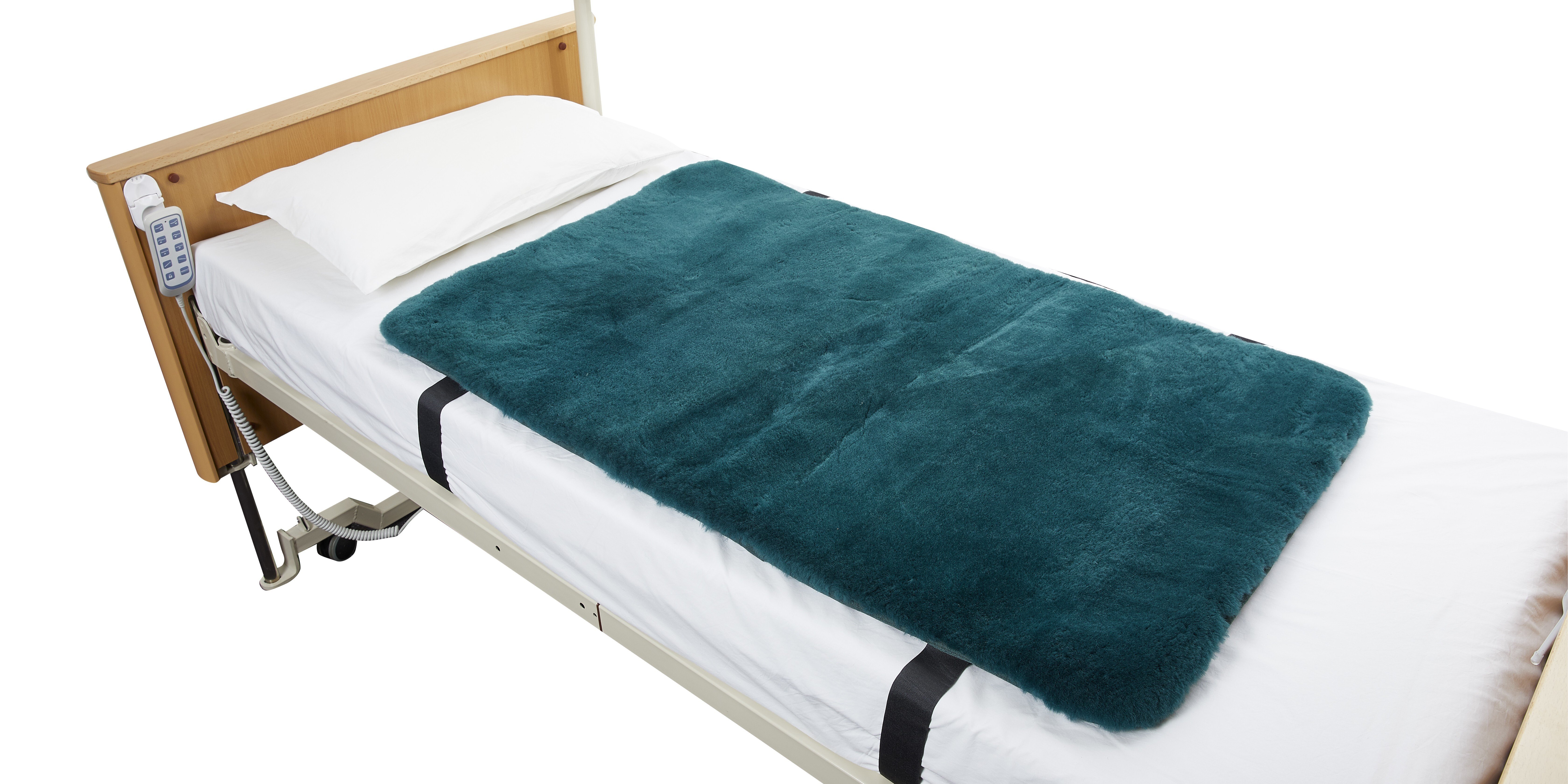
As the aged care and healthcare sectors continue to expand their pressure care product ranges, resellers encounter a growing number of items described as "medical sheepskin." The term, however, applies accurately to only one material category.
The distinction between genuine Medical Grade Sheepskin, wool fabric alternatives, and synthetic blends is not a matter of branding preference. It is a material and structural difference that affects clinical performance, laundering durability, and product compliance.
This article examines what separates Medical Grade Sheepskin from its alternatives, why the construction of a product determines its performance in care settings, and what resellers should evaluate before adding any sheepskin-style product to their range.
Wild Goose Australia states that its medical sheepskin range is made from genuine Australian sheepskin and positions the category around Australian Standard AS 4480.1, providing a useful reference point for the material distinctions discussed here.
Medical Grade Sheepskin refers specifically to a tanned woolskin in which the wool fibre remains naturally attached to the animal hide. To earn the Medical Grade designation under Australian Standard AS 4480.1, the product must satisfy measurable criteria.
These criteria cover the wool, the hide, the product dimensions, wool fibre diameter, wool pile height, shrinkage temperature, colourfastness, and related product testing requirements.
The tanning process is also central to the category because the hide must retain the properties needed for healthcare use and repeated laundering.
The standard also references Urine Resistant leather, reinforcing that the hide itself remains a functional part of the product rather than a removable or incidental backing.
These specifications reflect the measurable properties required for a sheepskin to function as a prophylactic pressure care device.
In clinical and aged care environments, the phrase "medical sheepskin" carries regulatory and practical weight. Purchasing officers and healthcare professionals rely on that designation to indicate a product that meets defined standards for pressure redistribution, microclimate management, and infection control through laundering.
When a product described as "medical sheepskin" does not meet the AS 4480.1 specification, the gap between expectation and performance creates risk. This risk extends from the care facility, where product failure may affect patient outcomes, through to the reseller, whose credibility rests on the accuracy of the products it supplies.
A wool fabric alternative is typically constructed by weaving or knitting processed wool fibres onto a fabric backing, which may be cotton, polyester, or a blended textile. The wool in these products has been shorn, cleaned, carded, and mechanically assembled into a textile surface. It is no longer attached to a hide.
A common misconception is that high fibre density in a wool fabric product equates to clinical equivalence with genuine sheepskin. Some of these products do achieve notable fibre density and can be laundered at elevated temperatures.
However, the structural relationship between fibre and backing is fundamentally different from a genuine sheepskin, and this difference alters how the product behaves under sustained clinical use.
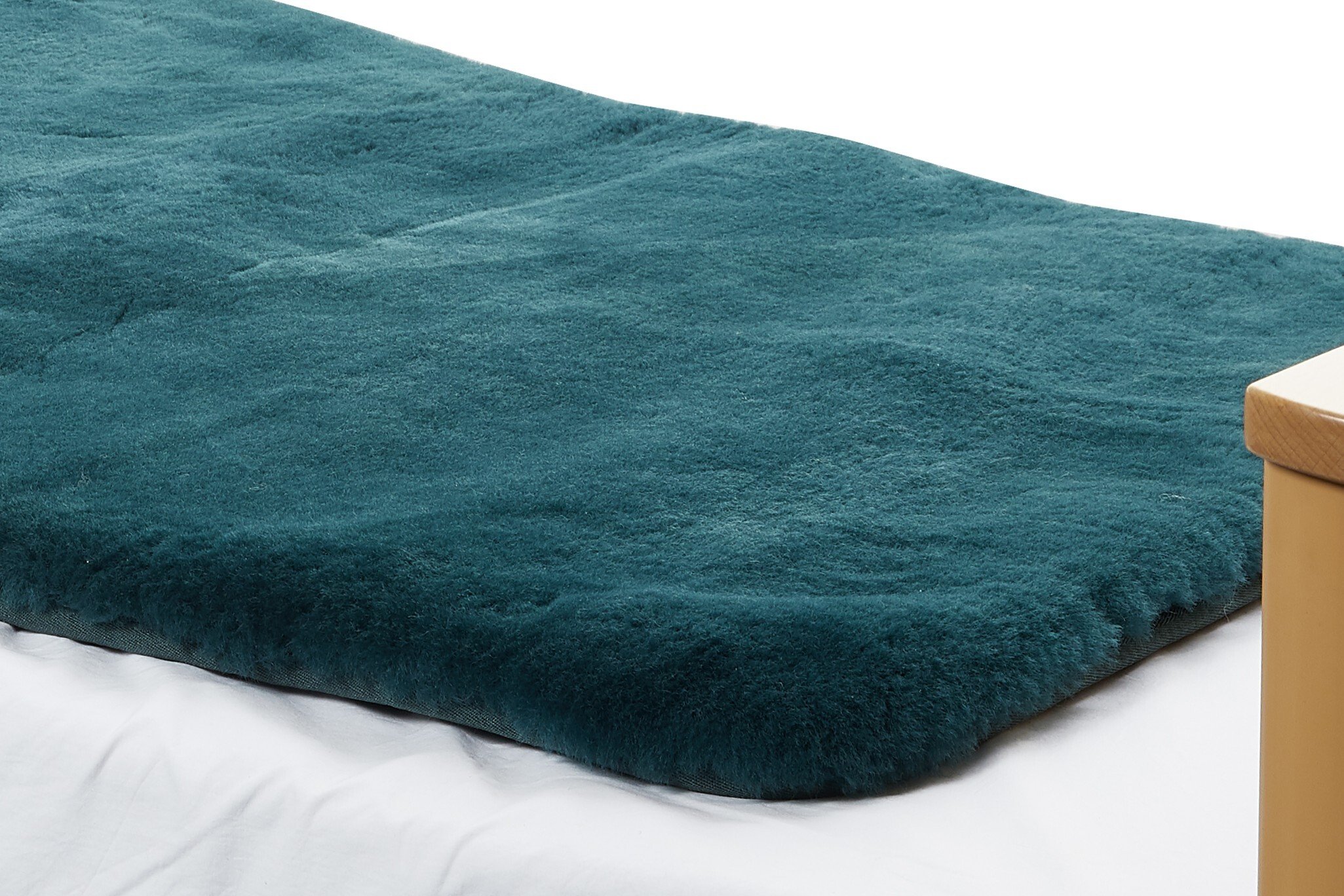
In a genuine Medical Grade Sheepskin, wool fibres grow from follicles embedded in the hide, creating a resilient, three-dimensional fibre structure with inherent "spring-like" properties.
When a patient rests on the surface, the fibres compress and recover in a pattern that redistributes pressure across bony prominences (the skeletal areas most vulnerable to pressure ulcers).
Wool is hygroscopic: it can absorb up to 33 percent of its own weight in moisture vapour without feeling damp. The outermost cuticle layer also allows fibres to slide over one another, reducing shear forces (the lateral friction that contributes to skin breakdown).
In a wool fabric alternative, fibres are mechanically bound to a backing rather than growing from a natural substrate, which can reduce resilience and alter moisture transport.
Clinical interest in wool-based support surfaces remains active, and a 2026 BMC Nursing study reported lower pressure-injury incidence in a wool-based support-surface intervention than in a polyester-based control surface. That finding does not make every wool product equivalent to Medical Grade Sheepskin, but it does reinforce why material construction deserves close evaluation.
Resellers operate in a supply chain where product descriptions must be accurate and defensible. When a healthcare buyer orders "medical sheepskin," that buyer expects a product that meets the standards implied by the term.
Supplying a wool fabric alternative or a synthetic blend under that description, whether intentionally or through unclear sourcing, exposes the reseller to disputes, returns, and reputational damage.
The distinction is especially relevant for resellers who supply NDIS (National Disability Insurance Scheme) providers, aged care facilities, and hospital procurement departments. These buyers are accustomed to specification-based purchasing and will audit material claims when product performance does not meet expectations.
Accurate material classification also supports clearer product positioning. A reseller who stocks both genuine Medical Grade Sheepskin and wool fabric alternatives can present each product category on its own merits, with transparent descriptions of construction, compliance, and intended use.
This approach avoids the risk of conflating product categories and allows the reseller to serve a wider range of price points and clinical needs without compromising the integrity of either product line.
Wild Goose Australia supports its wholesale partners with consistent product quality, accurate material documentation, and marketing support to facilitate clear, specification-led positioning.
Before adding a medical sheepskin product to inventory, resellers should seek clear answers to several material and compliance questions. Does the product carry the AS 4480.1 compliance stamp on the leather backing? Is the wool naturally attached to the hide, or is it a wool-on-fabric construction?
Resellers should also confirm the designated shrinkage temperature category (RegTemp or HiTemp) and the laundering temperatures the product permits.
Questions about the tanning process are equally important. Has the leather been treated for urine resistance? What laundering agents are recommended, and which chemicals must be avoided to preserve the product?
These details indicate whether a supplier understands the clinical requirements of the product or is simply reselling an unverified sheepskin item.
Several observable characteristics can indicate that a product marketed as "medical sheepskin" may not be genuine. A fabric or textile backing visible on the underside, rather than a tanned leather hide, suggests a wool fabric construction. The absence of an AS 4480.1 compliance label is another indicator.
Inconsistent wool pile density, excessively low pile height, or fibres that do not recover their shape after compression may also signal a non-compliant product. Products that cannot be laundered at temperatures above 60 degrees Celsius without damage are unlikely to meet the HiTemp designation required for institutional infection control.
Resellers who develop familiarity with these indicators are better equipped to evaluate new suppliers and to differentiate their product offering in a market where material claims are not always substantiated.
The distinction between genuine Medical Grade Sheepskin and wool fabric alternatives is structural, measurable, and consequential. It affects pressure redistribution, moisture management, laundering durability, and compliance with Australian Standard AS 4480.1.
For resellers, understanding this distinction is a commercial and ethical responsibility. Accurate product language protects the trust of healthcare buyers, supports defensible product positioning, and reduces the risk of supplying products that do not perform as described in clinical settings.
Wild Goose Australia describes its wholesale partnerships around consistent product quality, strong reseller support, and genuine Australian sheepskin across its medical range.
Resellers seeking to stock products that meet the AS 4480.1 standard can rely on Wild Goose Australia for material accuracy, consistent supply, and the documentation required to support informed purchasing in healthcare and aged care markets.
Medical Grade Sheepskin retains wool fibres naturally attached to a tanned animal hide, meeting Australian Standard AS 4480.1. A wool fabric alternative uses processed wool fibres woven onto a textile backing.
This structural difference affects pressure redistribution, moisture management, and laundering durability in clinical settings.
AS 4480.1 specifies requirements for tanned sheepskins and lambskins used in healthcare. It defines criteria for wool fibre diameter, pile height, leather shrinkage temperature, and urine resistance that apply to wool-on-hide products, not wool-on-fabric constructions.
Healthcare buyers, NDIS providers, and aged care facilities purchase based on material specifications. Wild Goose Australia produces all its medical sheepskin products from genuine Australian sheepskin, giving resellers a verifiable, standards-compliant product to offer these buyers with confidence.
Some wool fabric alternatives tolerate elevated laundering temperatures. However, AS 4480.1 includes shrinkage-temperature requirements for the leather component of medical sheepskin, which is a criterion tied to tanned hide rather than fabric backing.
Wild Goose Australia presents its medical range as genuine Australian sheepskin and emphasizes consistent product quality for wholesale partners. For resellers, the practical step is to ask every supplier for clear documentation on material construction, testing, and the basis for any AS 4480.1 claim.